Services
Approach and focus
Here I describe how I work and what forms of psychological support are offered within Sportfeedback. The practice is small-scale and focused on psychological work that supports self-regulation, mental health and sustainable development, rather than psychiatric treatment.
Neurofeedback
I offer neurofeedback as a support for work with self-regulation and recovery. For some people, this involves a limited number of sessions with a focus on, for example, sleep, stress and a sense of inner stability. Others choose to integrate neurofeedback into a longer-term psychological process.
Psychological services
I offer psychological consultations where we explore together how thoughts, emotions, the body and behaviour interact in your life. The sessions are shaped by your needs and take place in a relational and process-oriented spirit, where safety, presence and respect are central. The work is inspired, among other approaches, by mindfulness, ACT and other psychological perspectives that may be relevant to you. For some, the conversations are primarily about support and reflection; for others, a more active change process. Sport psychology perspectives are used here not primarily for performance, but to understand engagement, recovery, motivation and sustainability in a broader life perspective.
Lectures
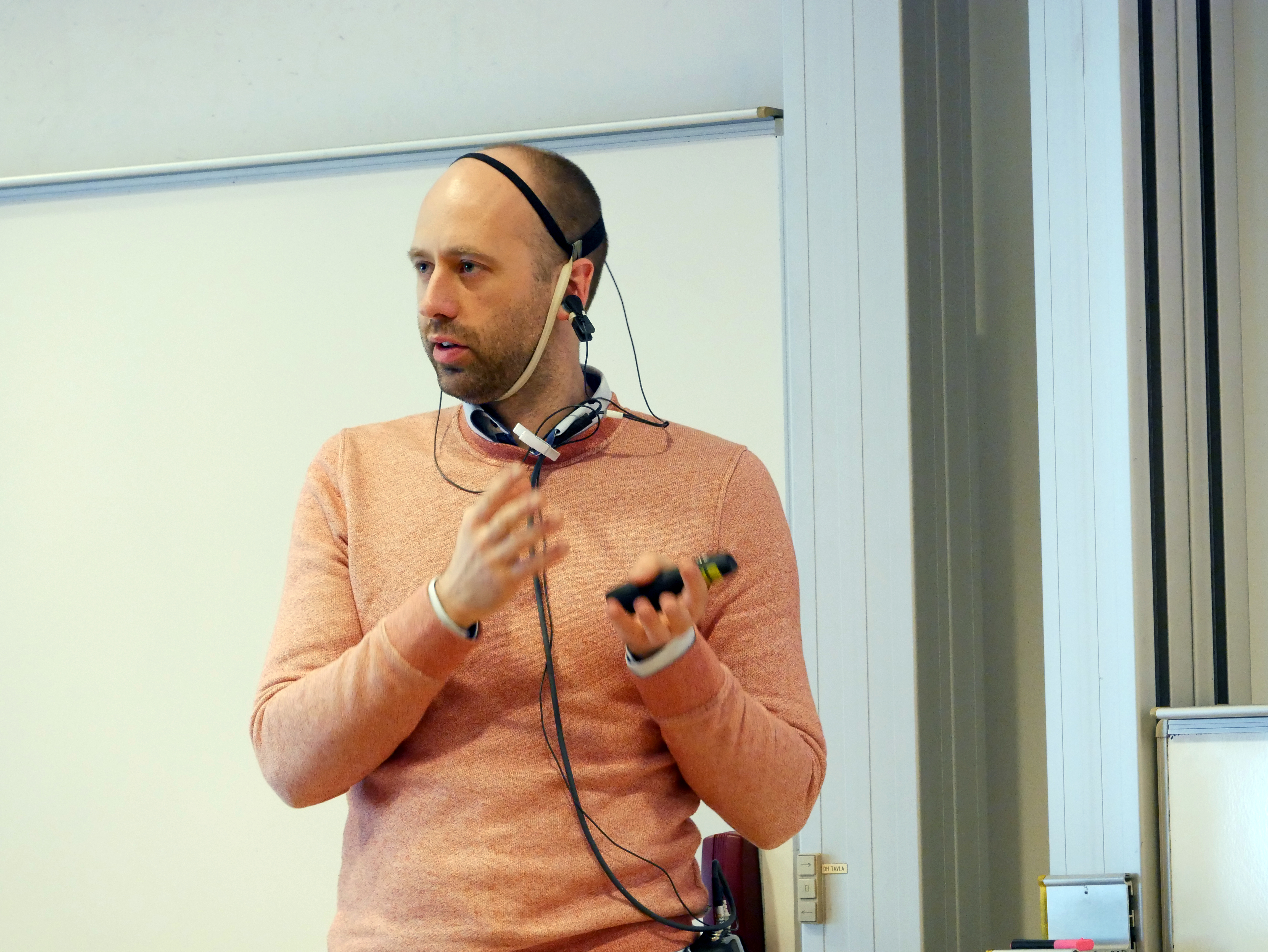
I have experience giving lectures in a range of national and international conferences and professional settings, mainly connected to my work in healthcare, research and development.
The lectures have often focused on how I work with neurofeedback and sport psychology perspectives, as well as the role of the nervous system in self-regulation and mental health.F.A.Q.
Yes. We can work remotely depending on your needs and what we agree on together.
In my work, sport psychology is used in a broad sense. It can be relevant even if you are not active in sports.
Many people who reach out are professionals or entrepreneurs who want a health-promoting approach to mental wellbeing, focus, and self-regulation.
This work is mainly aimed at well-functioning individuals who want to develop and take care of themselves in a more sustainable way.
It varies from person to person and depends on your goals, circumstances, and how the training is integrated into daily life.
Some notice changes relatively early, while for others the process is more gradual over time.
Here, neurofeedback is used as support for self-regulation and recovery. The aim is to strengthen stability, presence, and sustainable wellbeing, rather than to follow a standardized treatment protocol.
No. Sport psychology perspectives are used here in a broader way and can be relevant even if you are not active in sports.
Many people who reach out are professionals or entrepreneurs who want a health-promoting approach to mental wellbeing, focus, and self-regulation.
This work is mainly aimed at well-functioning individuals who want to develop and take care of themselves in a more sustainable way.
Sportfeedback is a small-scale practice alongside my main work as a psychologist, which means availability is limited.
All contact begins with a message through the contact page. After that, we assess together whether I have the possibility to take on new clients and whether this approach is a good fit for you.